
Maintaining the Legend: First Oil Change on the 85,000-Mile Boxster
Recapping the first oil change on my Porsche Boxster at 85,000 miles. Dealing with oil leaks, filter issues, and why I chose Mobil 1 0W-50.
When you buy a used Porsche with an unknown service history, the first thing you do is establish a baseline. That means not trusting whatever the previous owner may or may not have done and starting fresh. For me, that meant tackling the first Boxster oil change at 85,000 miles — and the experience taught me a few things about what it actually takes to maintain one of these cars at home.
Baseline Maintenance at 85,000 Miles
I picked up the car at 83,000 miles. By the time I got around to this service, the odometer had ticked up to 85,000. That’s only 2,000 miles of ownership, but with no service records to speak of, I had no idea when the oil had last been changed, what viscosity was in the sump, or whether the previous owner had used the right filter.
The Porsche community is pretty consistent on this: you change the oil yearly or every 5,000–7,000 miles, whichever comes first. The 986 flat-six is a robust engine when maintained, but oil is its lifeblood. Running it on degraded or wrong-spec oil accelerates wear on bearings, the IMS, and the oil pump — none of which are cheap to deal with. Skipping a Boxster oil change because the mileage looks low is not worth the risk.
Starting from zero made sense. I drained it, inspected what came out, and went from there.
The DIY Process
If you’ve never changed oil on a mid-engine car before, the 986 will introduce you to a few quirks fast.
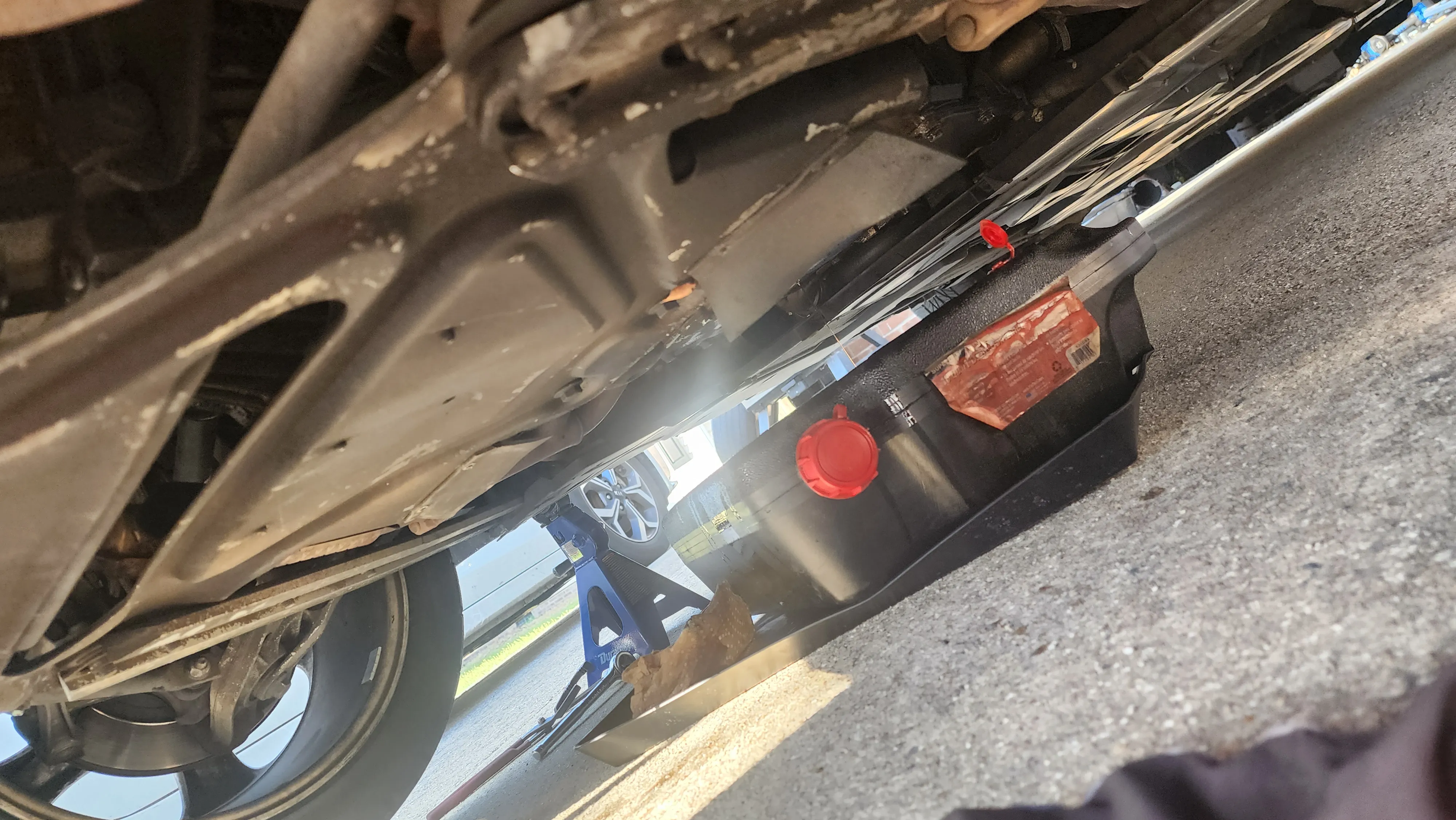
The drain happens quickly — and I mean fast. The moment that drain plug clears the sump, oil pours out like it’s been waiting. Have your drain pan positioned and ready before the plug comes out. This is not like draining a four-cylinder family sedan. The volume and speed of the flow will catch you off guard if you’re not prepared.
The capacity is substantial. The Boxster takes nearly 9 quarts of oil, which is more than most people expect from a sports car engine. Plan ahead and have enough oil on hand before you start. Running short and trying to top off with a different oil is not ideal.
The filter gave me trouble. The old oil filter was on there well — whether from heat cycling, over-torquing at the previous service, or just years of sitting, it did not want to come off. Getting the right filter wrench for the 986’s oil filter housing is worth it. Don’t improvise here; you risk damaging the housing if you go at it with the wrong tool or brute force.
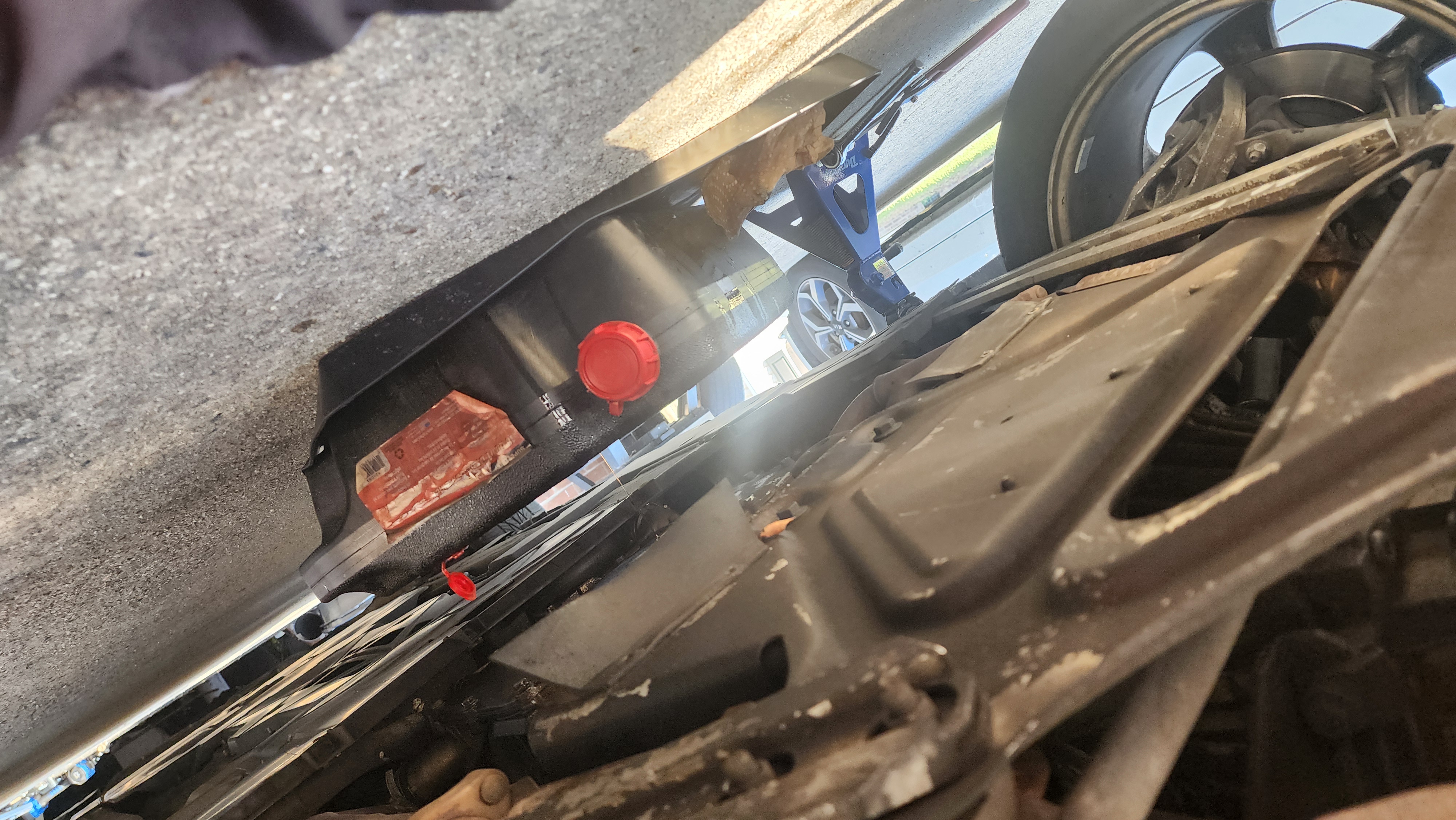
With the old oil drained and the filter finally off, I took a close look at what came out. The oil was dark — not catastrophically so, but definitely due for a change. No metal flakes visible, no milky discoloration suggesting coolant contamination. That was a good sign.
Inspection Findings: The RMS Concern
While I had the car up on jacks and was doing the full walk-around that a proper Boxster oil change requires, I found something I was half-expecting and half-dreading: a slight oil leak at the junction between the engine and the transmission.
The location and appearance pointed to a Rear Main Seal (RMS) leak. For anyone who’s spent time in the 986 forums, this is a familiar diagnosis. The RMS sits at the back of the engine where the crankshaft exits toward the transmission, and it’s a known wear item on the 986 platform. It doesn’t always announce itself loudly — often it starts as a slow seep that shows up as residue or wet streaking in that area.
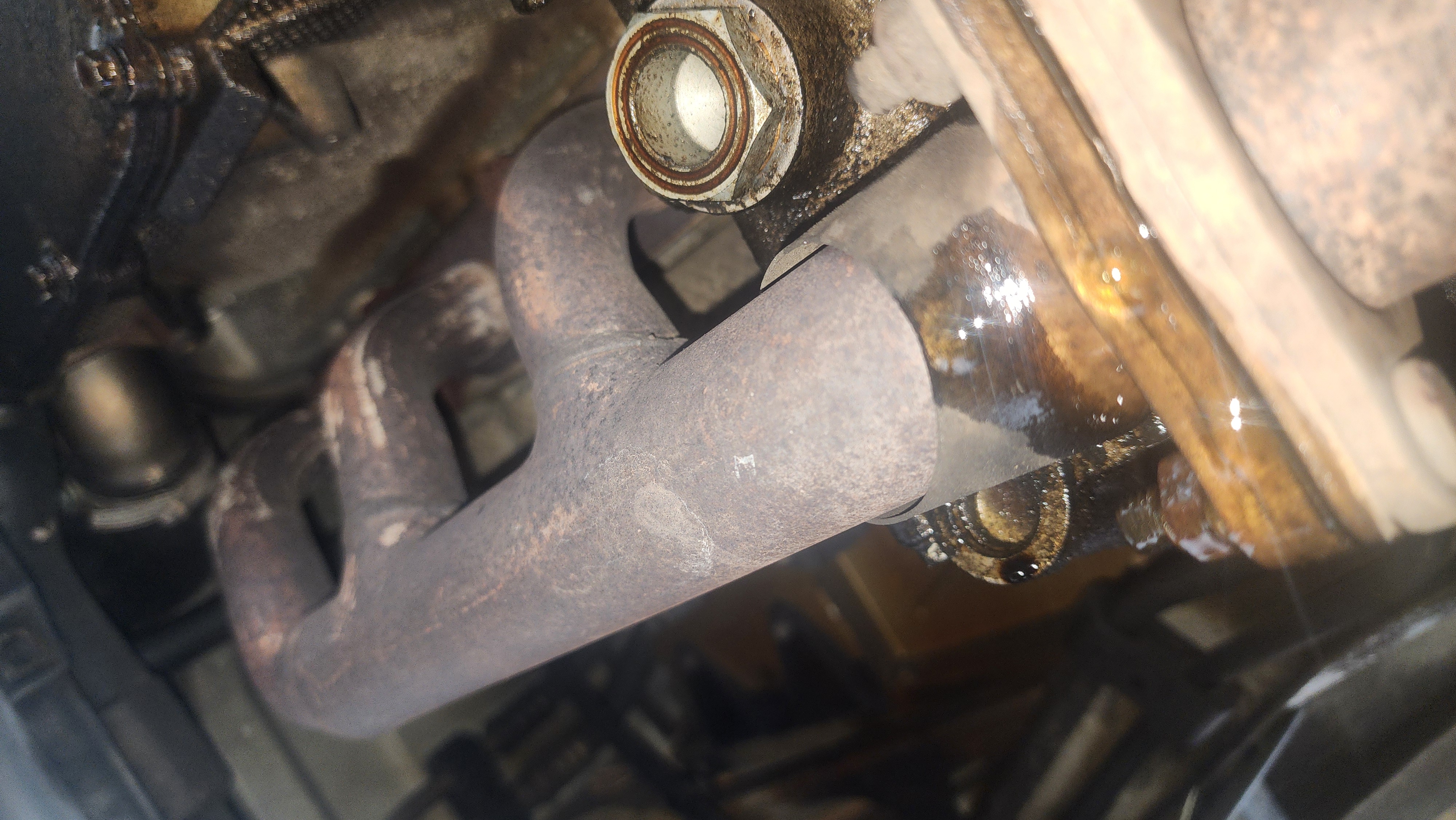
The forum consensus on a slow RMS leak is consistent: monitor it, track it, and don’t panic unless it gets worse. The real reason to hold off on addressing it immediately is the access — the RMS is not a stand-alone repair on the 986. Getting to it properly means pulling the engine and transmission, which puts you squarely in clutch replacement territory. Most owners combine both jobs when the time comes to keep labor costs manageable.
For now, my plan mirrors the community advice: keep an eye on the leak between oil changes, watch for any acceleration in the seepage, and when the clutch eventually needs attention — which it will at this mileage — I’ll deal with the RMS at the same time.
Results and Next Steps
I filled the engine with Mobil 1 0W-50. The 0W-50 spec is well-regarded in the 986 community for this engine, particularly for daily-driven cars that see a range of temperatures. It’s a full synthetic formulation with the viscosity profile that suits the flat-six well.
The difference after the oil change was immediate and noticeable. The engine sounds smoother at idle, throttle response feels crisper, and there’s a general refinement to the way the car runs that wasn’t there before. Whether it’s fresh oil chemistry, the correct viscosity making contact the way it should, or just the placebo effect of knowing you’ve done something right — the Boxster feels better.
That said, one service doesn’t mean the car is fully caught up. The baseline is set on the oil side, but there are other items on the list. Brake pads are next — the current setup has some life left, but I want to know exactly what’s on the car before I start leaning on the brakes in more spirited situations. After that, spark plugs are on the schedule. On a flat-six at this mileage with an unknown service history, fresh plugs are a cheap way to rule out ignition-related hesitation and make sure the combustion side is healthy.
The 986 rewards maintenance. It’s a car that was engineered with real performance intent, and when you give it the attention it needs, it delivers. A proper Boxster oil change is the starting point — now it’s about building on that foundation.
Mileage: 85,000
Oil used: Mobil 1 0W-50
Capacity: ~9 quarts
Findings: Suspected RMS leak — monitoring
Up next: Brake pads, spark plugs