
Beef Back Ribs on the Weber Kettle: Hickory, Gospel, and 300 Degrees
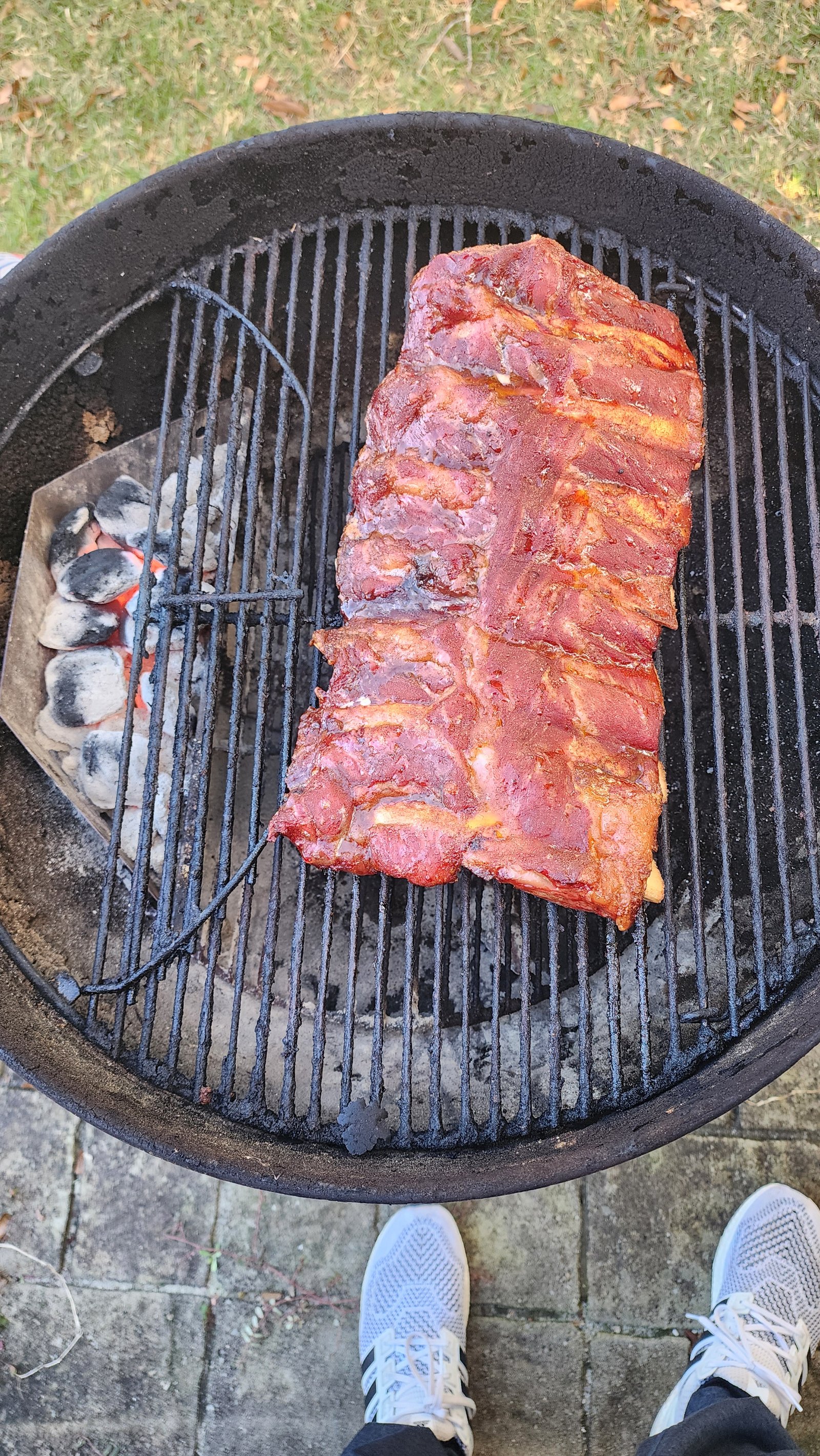
A Costco rack of beef back ribs, Kingsford Hickory charcoal, The Gospel rub and a two-zone Weber kettle at 300°F for about three hours.
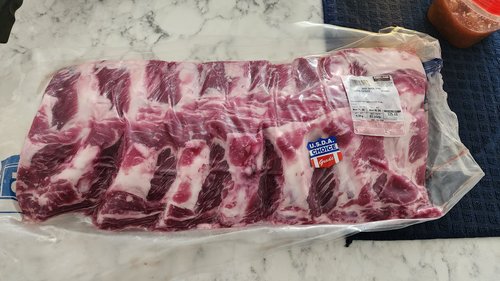
Pork ribs get most of the attention in my backyard, but every so often a rack of beef ribs at Costco catches my eye. This Saturday it was a Kirkland Signature rack of USDA Choice beef back ribs. No offset smoker, no pellet grill, just the Weber kettle, a bag of charcoal, and about three hours.
What beef back ribs are (and aren't)
Beef back ribs come from the rib section, the same part of the animal that gives you ribeyes and prime rib. When the butcher cuts those steaks and roasts off the bone, the rack left behind is what you're buying. That means most of the meat sits between the bones rather than piled on top of them like on a short rib. They won't give you the giant dino-rib look, but they're well marbled, they cook faster than short ribs, and they're a lot easier on the wallet.
The rack I got had good marbling running through it, which is what you want for a cook like this. The fat renders and keeps things moist without much babysitting.
The fuel: Kingsford Hickory plus regular
I ran a mix of Kingsford Hickory charcoal and regular Kingsford briquettes. The hickory briquettes bring the smoke, and the regular briquettes fill out the fire so the whole cook isn't leaning on one bag.
The coals went into a charcoal basket banked against one side of the kettle, giving me a two-zone setup: hot side on the left, ribs on the cool side, lid on. That indirect setup turns the kettle into a small smoker. The ribs never sit over direct flame, and the vents control the temperature.
The rub: The Gospel
For seasoning I went with The Gospel rub. It's sweet with a good smoky backbone, and on beef it builds a deep red, almost mahogany color as it cooks. I just put a generous, even coat on both sides and let the rack sit while the coals got going.
The cook: 300 degrees or less for about 3 hours
The goal was to keep the kettle at 300°F or under for the whole cook, and the Weber's lid thermometer sat right around 300 most of the afternoon. On a kettle, that mostly means setting the vents and leaving them alone. Small adjustments, then wait 10 to 15 minutes to see where things land before touching anything again.
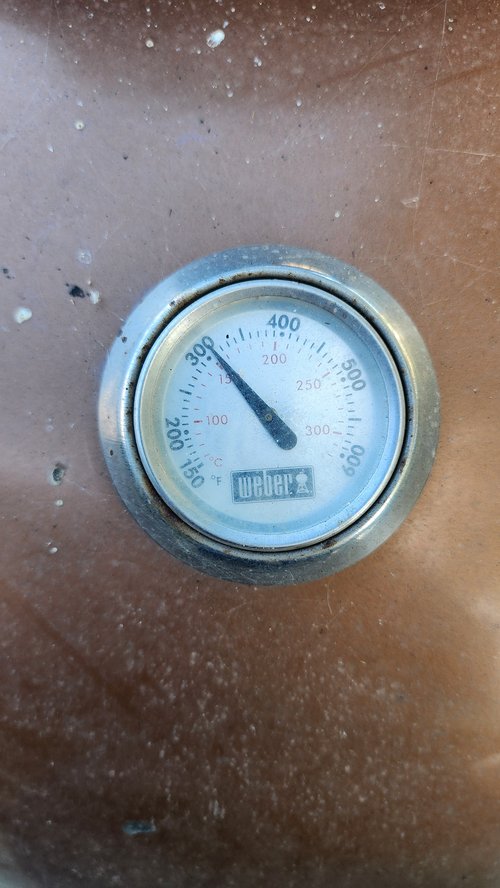
One thing to keep in mind is that the lid thermometer reads the air at the top of the dome, not at the grate where the meat is. It's a good guide for staying consistent, but the grate temperature can run a little different depending on where the coals are.
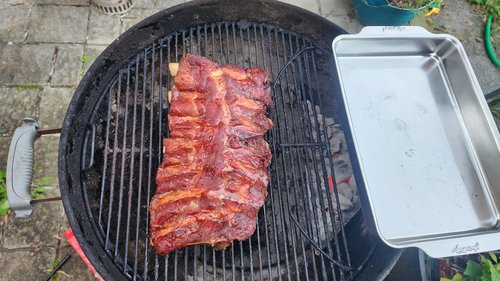
After about three hours the ribs had a glossy, dark red bark and the bones were starting to show along the edge of the rack.
How they turned out
The Gospel did exactly what I hoped. The flavor was sweet up front with smoke right behind it, and the hickory charcoal added to that without overpowering the beef.
Quick recap
- Meat: Kirkland USDA Choice beef back ribs, 4.24 lb
- Grill: Weber kettle, two-zone indirect with a charcoal basket
- Fuel: Kingsford Hickory + regular Kingsford briquettes
- Rub: The Gospel
- Temp: 300°F or under
- Time: About 3 hours
If you've got a kettle and have been on the fence about beef ribs, this is an easy weekend cook. Grab a rack, bank the coals to one side, keep it around 300, and let the rub do the work.